
ATM Security

Secure ATMs: how cash machines protect your money

An ATM is packed with cash and often sits on a street corner all night, so secure ATMs are built more like bank vaults than vending machines. Here's how they're protected, how criminals still try to get in, and how to keep yourself safe.

Two machines in one

Every ATM is really two parts. The top half is a computer: the screen, keypad, card reader and receipt printer. It holds no money, so it's built like normal electronics.

The bottom half is a safe. Inside are locked cassettes of banknotes, and the only way out for cash is a narrow slot that the safe opens on command. Most attacks target this safe, so most of an ATM's security is focused on it.

ATM safes are tested and graded against the European standard EN 1143-1. Testers attack them with tools and measure how much effort it takes to get partial access (a hand inside) or complete access. The higher the grade, the longer it holds out.[2]

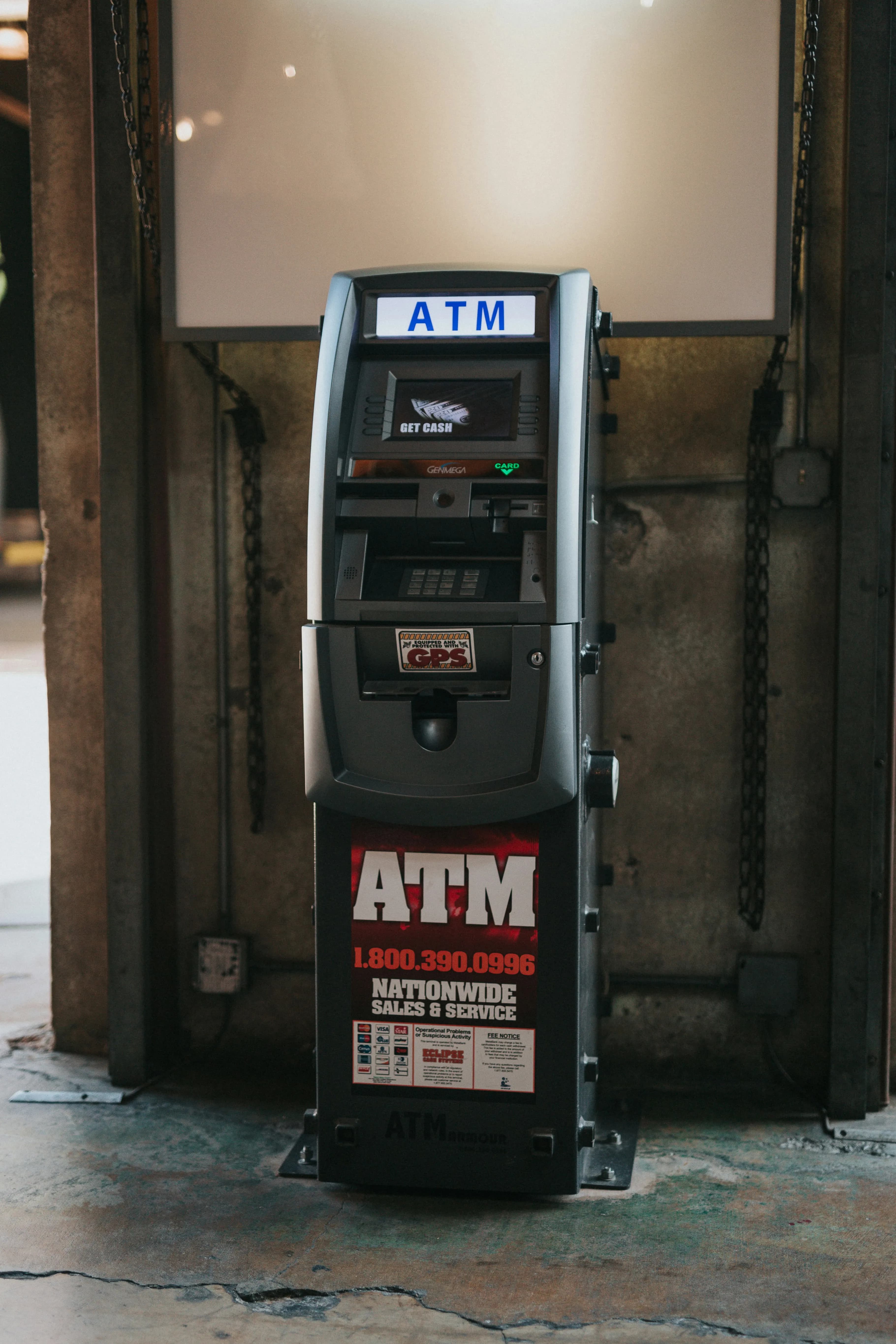
A free-standing ATM with the screen and keypad on top and a heavy cabinet below
The heavy lower cabinet of a free-standing ATM is the safe where the cash is kept.

Layers of protection in secure ATMs

No single feature stops every attack. ATMs use layers, so that if one is beaten the next one slows the criminal down, raises the alarm or makes the cash worthless.

Keeping it in place

  • Bolted to the floor

    ATM safes have anchor holes so they can be bolted deep into a concrete floor, and the anchoring itself is load-tested as part of the safe standard. A machine that can't be lifted can't be taken away to open later.[2]

  • Reinforced chassis and safe

    Thick steel walls and strengthened frames are designed to resist cutting, prising and brute force, as well as gas and explosive attacks.[1]

  • Barriers outside

    Steel bollards, planters and reinforced shop fronts stop vehicles from being driven into the building, a tactic known as a ram raid.

  • High-security locks

    The safe door uses electronic or combination locks, often with a time delay (the lock waits several minutes before opening) and dual control (two people each hold part of the code). Every opening is logged.

Detecting tampering

  • Sensors and alarms

    Sensors watch for vibration, heat, tilting and the door being forced, and trigger an alarm system linked to a monitoring centre.[1]

  • Cameras

    Built-in cameras record the person using the machine, the area around it and the cash slot.[1]

  • Anti-skimming card readers

    Card readers are designed to detect and block skimmers, devices fitted over the slot to copy card details.[1]

  • Anti-cash trapping

    The cash slot can detect a trap placed over it to catch notes, secure the money if one is found, and even detect someone drilling into the shutter.[1]

Making stolen cash worthless

  • Ink-staining cassettes

    If a cash cassette is forced open or removed without authorisation, it releases a permanent dye (often bright red) that soaks the notes. The stained cash is instantly recognisable as stolen, and banks have strict rules about exchanging it, so it's almost impossible to spend.[1][3]

  • Serial number tracking

    Every banknote has a unique serial number, and modern cash machines can read them. Recorded serial numbers let police link stolen notes back to a crime. It famously helped crack the 1972 Watergate break-in: the burglars carried brand-new, sequentially numbered $100 bills, which investigators traced through the Federal Reserve to a Miami bank and on to money from President Nixon's re-election committee.[4]

Protecting the software

  • Encrypted cash dispenser

    The ATM's computer and its cash dispenser talk to each other in encrypted, authenticated messages. Plugging in a fake “black box” controller or infecting the computer with malware can no longer simply order it to pay out.[1]

  • Updates and alerts

    Like any computer, ATMs need security updates. Manufacturers also send operators alerts when new attack methods appear.[1]

ATM crime by the numbers

A Freedom of Information request to London's Metropolitan Police revealed how ATMs in the capital were attacked between 2019 and 2022.[5]

126ATM attacks in London, 2019–2022
14%were successful. Most attacks failed.
London ATM attacks by method, 2019–2022
  • Black boxA device wired into the cash dispenser to command it to pay out
    39
  • Drag outRipping the whole machine out, often with a vehicle
    26
  • ForcePrising, smashing or levering the machine open
    25
  • CuttingAngle grinders or cutting tools used on the safe
    16
  • OtherMethods not otherwise classified
    9
  • GasFilling the machine with gas and igniting it
    6
  • Ram-raidDriving a vehicle into the building
    4
  • ExplosivesSolid explosives packed into the machine
    1
View as a table
MethodAttacks
Black box39
Drag out26
Force25
Cutting16
Other9
Gas6
Ram-raid4
Explosives1
Total126

Attacks per year: 2019: 56 · 2020: 50 · 2021: 8 · 2022: 12. The most common method, the black box attack, targets the link between the ATM's computer and its cash dispenser. That's exactly what encrypted dispensers are designed to stop.[5]

Note: the published table lists 5 “Other” attacks in its total row, but its yearly figures add up to 9. We've used 9, which matches the overall total of 126.

Real-life ATM attacks

Despite all this protection, criminals keep trying, sometimes with surprisingly low-tech methods.

Chester, UK · September 2026

Wheeled away in a shopping trolley

In the early hours of Sunday 6 September, offenders broke into the Spar store on High Street, Tattenhall. They used tools to remove the ATM, then pushed it out of the shop in a small shopping trolley. The machine was later found dumped on Belle Vue Lane, Guilden Sutton, and Cheshire Police appealed for witnesses and dashcam footage.[6]
Northern Ireland · 2019

The digger gangs

In April 2019, thieves used a stolen excavator to smash through a shop wall in Dungiven and pull out the ATM, then loaded it into a van with part of its roof cut away. It was the eighth ATM theft in the area that year. “There is one basically happening every week now,” the shop owner said. He decided not to replace the machine, leaving the community without one.[7]

Germany · 2022–2025

From one explosion a day to a sharp drop

In 2022 Germany saw 496 ATM explosion attacks, more than one a day, mostly by organised gangs from the Netherlands. Banks spent over €300 million on machines that blow out thick fog or stain the notes with dye when tampered with, and locked ATM lobbies at night. By November 2025 there had been just 115 attacks that year, and parliament voted for longer prison sentences. The gangs have started moving to neighbouring Austria.[8]

United States · 2018

“Jackpotting” arrives

The US Secret Service warned that gangs were attacking stand-alone ATMs with Ploutus.D malware. After getting physical access to the machine, they infected it so it would spit out cash on command. Machines still running Windows XP were especially vulnerable.[9]

On screen · Breaking Bad · Season 2, Episode 6

“Peekaboo”: why stealing an ATM is harder than it looks

In this 2009 episode, Jesse Pinkman tracks down a couple who robbed his associate. In their run-down house he finds they've stolen an entire ATM from a convenience store, and Spooge is trying, and failing, to break it open by hand. The episode ends with the machine being tipped over onto him, and Jesse leaving with the cash.[10]

It's fiction, but it gets one thing right: stealing an ATM is the easy part. The safe inside is built to resist hours of attack with proper tools, and on a modern machine, forcing the cassettes could leave the thieves with a pile of dye-stained notes nobody will accept.

Written by J. Roberts and Vince Gilligan, directed by Peter Medak. First aired 12 April 2009. Aaron Paul was nominated for an Emmy for his performance in the episode.[10]

Protect yourself at the cash machine

The machine is well protected, but your card and PIN are only as safe as your habits.

  • Cover your PIN

    Shield the keypad with your other hand or your purse. Hidden cameras and people looking over your shoulder are the most common way PINs are stolen.

  • Check before you insert

    Look and feel for anything loose, bulky or out of place on the card slot, keypad or cash slot. If it looks wrong, use a different machine.

  • Watch for cash trapping

    If the machine whirrs but no cash appears, a device may be blocking the slot. Don't walk away. Call your bank from where you're standing.

  • Never accept “help”

    If your card gets stuck, be wary of a stranger offering advice or asking you to re-enter your PIN. Contact your bank immediately.

  • Choose your machine

    Indoor, well-lit ATMs in banks or busy shops are safer than isolated machines, especially at night.

  • Pocket it, then go

    Put your cash and card away before you step away from the machine, and be aware of who is nearby.

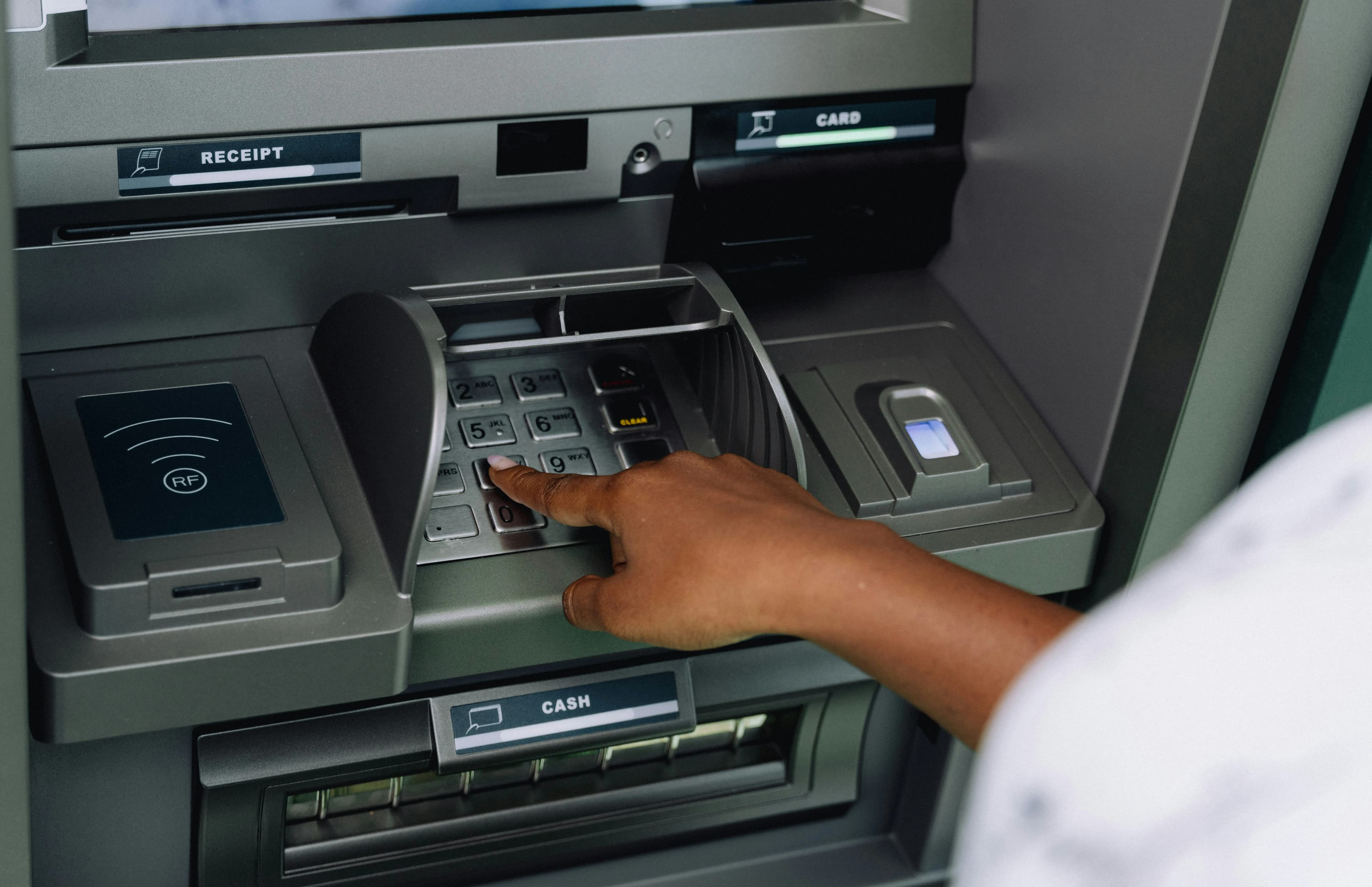
A person entering a PIN on an ATM keypad

References

  1. Diebold Nixdorf (n.d.). DN Series ATM Security. Diebold Nixdorf product information.
  2. British Standards Institution (2019). BS EN 1143-1: Secure storage units. Requirements, classification and methods of test for resistance to burglary. Safes, ATM safes, strongroom doors and strongrooms. BSI.
  3. Wikipedia (n.d.). Intelligent banknote neutralisation system. Wikipedia.
  4. Koning, J. P. (2019). The Watergate banknotes. Moneyness (blog).
  5. Metropolitan Police Service (2024). Current ATM crime, attacks & crime prevention from 2019 to 2022 (FOI ref. 01.FOI.23.033469). Freedom of Information disclosure.
  6. Cheshire Constabulary (2026). Police appeal following ATM attack in Chester. Cheshire Police news, 10 September 2026.
  7. Frisk, A. (2019). Thieves withdraw bank machine from store wall using stolen excavator. Global News, 9 April 2019.
  8. Reuters (2025). The great cash crash: ATM explosions drop in Germany, pop up in Austria. Cyprus Mail, 13 November 2025.
  9. Krebs, B. (2018). First ‘Jackpotting’ Attacks Hit U.S. ATMs. KrebsOnSecurity, 27 January 2018.
  10. Wikipedia (n.d.). Peekaboo (Breaking Bad). Wikipedia.

Further reading